There's a moment every local business owner knows well. You search for your own business on Google and everything looks fine — the address is right, the hours are updated, you've got a handful of decent reviews. But then you notice the competitor down the street is appearing above you. They have more photos. Better photos. And for some reason, Google seems to prefer them.
That frustration used to be hard to explain. For years, 'SEO' meant keywords, backlinks, and meta descriptions — text-based signals that search engineers could tweak and measure. But the ground has shifted. Google's ranking systems have grown eyes. They can now interpret images, read the mood of a storefront, recognize what kind of cuisine a restaurant serves just from a single plate photograph. The visual layer of your online presence matters more than most people realize — and AI is the reason why.
Why visuals suddenly matter for local ranking
Google processes billions of image-based queries every month. Its Vision AI can identify objects, read text in photos, assess image quality, and even infer context — a warmly lit dining room signals something different from a poorly lit stock image. When someone searches 'cozy coffee shop near me,' the algorithm isn't just matching keywords in your business description. It's scanning your photos to see whether you actually look cozy.
42%
more map views for businesses with 100+ photos
35%
more website clicks from photo-rich GBP listings
2.5×
more likely to convert with optimized visual content
These numbers aren't just vanity metrics. They reflect a deeper behavioral truth: people trust what they can see. And search engines, trained on human behavior at massive scale, have learned to rank what people trust.
"Google doesn't just index your images. It interprets them — and that interpretation is now part of how your business gets ranked."
The problem is that most small business owners aren't equipped to manage the visual layer of their SEO the same way they'd manage keywords. Adding and optimizing images, understanding alt text, naming image files correctly, maintaining freshness — it's a lot, especially when you're also running an actual business.
That's where AI tools have stepped in. And they're doing it in ways that are genuinely useful, not just flashy.
What AI actually does with your images
There are a few distinct ways AI is being applied to visual local SEO, and they're worth understanding separately because they solve different problems.
The first is image analysis and optimization. AI tools can scan your existing Google Business Profile photos and tell you what's working and what isn't. A photo of your exterior taken at dusk might be visually beautiful, but if it's not clearly legible to machine vision, it may not be contributing as much as you think. Tools trained on computer vision models can flag this — recommending better lighting, clearer framing, or a higher angle that captures your signage more cleanly.
The second is automated alt text and metadata generation. For years, writing alt text for images was either skipped entirely or done in a painfully generic way ('image of restaurant interior'). AI writing tools can now generate descriptive, contextually accurate alt text that includes relevant local keywords without stuffing. It reads naturally to humans and signals clearly to search crawlers what's in the image and where it is.
Before uploading any photo to your Google Business Profile, rename the file using descriptive local keywords — 'authentic-karachi-biryani-clifton.jpg' tells search engines more than 'IMG_4821.jpg' ever will. AI tools can help you batch-rename entire photo libraries in seconds.
The third application — and perhaps the most interesting — is AI-powered photo generation and enhancement. Platforms now exist that let local businesses generate professional-quality photos of their products, storefront, or menu items without hiring a photographer. The output isn't always perfect, but for a single-location restaurant that can't afford a quarterly photo shoot, it fills a real gap.
The Google Business Profile battleground
If you've looked at Google's algorithm documentation — and most local SEO practitioners have — you know that 'prominence,' 'relevance,' and 'distance' are the three pillars of local pack ranking. What's less discussed is how much visual signals now feed into 'prominence.'
Google's own data has shown that businesses with more than 100 images on their GBP receive dramatically more direction requests and phone calls than those with fewer than 10. The algorithm appears to treat visual richness as a signal of business vitality — an active, well-photographed listing suggests an active, trustworthy business.
AI makes it possible for a small business owner to compete on this dimension even without a full-time marketing team. Tools like automated photo audits, image quality scoring, and AI-suggested photo categories take what used to be expert-level knowledge and make it accessible.
Reviews have a visual layer too
This is one that surprises people. User-generated photos — the ones your customers add to your reviews — are processed by Google's Vision AI just like your own images. A photo of a dirty table or a messy counter, uploaded in the context of a negative review, carries compounding weight. Conversely, a customer's candid shot of a beautifully plated dish, or a group of friends smiling at your venue, reinforces your listing's visual identity in ways that are harder to manufacture.
AI tools can help you monitor this. Sentiment analysis models that flag incoming photo reviews, alerting you when customer images don't align with your brand standards, are becoming part of the local SEO toolkit. You can't control what customers upload, but you can respond faster and more intelligently when something needs attention.
"The businesses winning in local search aren't just optimizing text anymore. They're thinking about every pixel that's associated with their name."
Where the human eye still wins
None of this means AI replaces judgment. An AI tool might tell you your lighting is suboptimal, but it can't tell you that the warm afternoon light falling across your shop floor is exactly the kind of thing that makes people fall a little in love with your place. Brand identity, emotional resonance, storytelling through imagery — these remain human domains, at least for now.
The best approach is a collaborative one. Use AI to handle the mechanical layer: file naming, alt text, image audits, freshness scheduling, and competitor visual benchmarking. Free up your own attention for the creative decisions that actually differentiate your business visually.
Getting started without overwhelm
If this feels like a lot to absorb, it helps to start with the basics. Audit your Google Business Profile right now. Count your photos. Look at them honestly — are they sharp, well-lit, and representative of what you actually offer today? If you have fewer than 20 good photos, that's your first job.
Then look at your file names and alt text. If your images are named with camera defaults, that's a quick fix. A free AI writing tool can help you generate descriptive alt text for your entire image library in an afternoon.
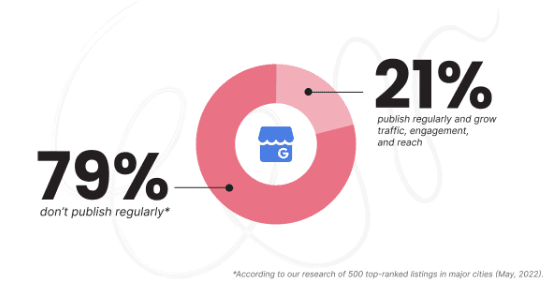
After that, think about frequency. Google rewards fresh content. A photo added monthly signals more vitality than 50 photos uploaded once and never touched again. Set a calendar reminder. Make it a habit. Let AI tools remind you when it's time to refresh.
Audit your GBP for photo count and quality. Rename your image files with local keywords before re-uploading. Write — or generate with AI — proper alt text for your top 10 most important images. That alone puts you ahead of most competitors.
Local search has always been about trust. Proximity, consistency, and reputation are the signals that have mattered for years. What's changed is that visual content is now an essential carrier of all three. AI didn't create this challenge — Google's increasingly sophisticated image understanding did. But AI is, genuinely, one of the better tools we have for meeting it.
The businesses that understand this early enough to act on it won't just rank better. They'll look better — which, in the end, is the whole point.